Saturday, July 25, 2009

SRC Donor's Life Exemplifies Southern Progressive Tradition.

We recently learned that the Southern Regional Council had received a bequest from the Estate of Elisabeth Larisey Kytle. We are grateful to Elisabeth Kytle and her late husband Calvin Kytle, whose lives serve to remind us that Southern progressivism has a long and distinguished history.
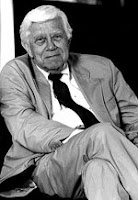
Elizabeth Larisey Kytle was born in Charleston, S.C., on July 25, 1913, the daughter of Alfred Oswald and Anna Belle Larisey. At age 13, she moved with her parents to Valdosta, Ga., and in 1935 she graduated from Georgia State Woman's College (now Valdosta State University). After graduating from college she took a position with the National Youth Administration, where she met Calvin Kytle, her future husband, an Emory graduate who later worked part time as a reporter for The Atlanta Journal Constitution. While Calvin was serving in World War II, Elisabeth took a position with the Citizen's Fact Finding Movement, and she also worked as a staff writer in the public relations department of the Bell Bomber Plant in Marietta, Ga.

Following the war, Mr. Kytle served briefly on the faculty of Emory University, and Mr. and Ms. Kytle became deeply involved in issues of civil rights. With a grant from the Rosenwald Fund, secretly administered by the Southern Regional Council, Calvin collaborated with Congressman James A. Mackay on an in-depth study of Georgia’s 1947 Constitutional crisis (sometimes referred to as the "three governors" conflict), which set the stage for Georgia’s political transformation. This study included interviews with politicians, factory workers, civic leaders, academics and preachers throughout Georgia’s 159 counties, including editor Ralph McGill, novelist Lillian Smith, defeated gubernatorial candidate James V. Carmichael, and others. This study, reputedly suppressed by the Talmadge regime, was later published under the title Who Runs Georgia?

The Kytles left Georgia in 1950, when Calvin took a position as an information officer for the Nationwide Insurance Company in Columbus, Ohio, and thereafter they lived in places as diverse as Cabin John, Md., Washington D.C. and Chapel Hill, N.C.

In 1958, Elizabeth Kytle published Willie Mae, a first-person account of a black woman's life and her experiences as a domestic worker in a succession of southern households in the first half of the Twentieth Century. Hailed by The New York Times as one of the best books of 1958, Willie Mae is a testament to the courage and strength of a generation of women who struggled to survive with dignity and humanity in the years before the civil rights movement. On the occasion of the republication of Willie Mae thirty years later, a reviewer in Southern Changes noted that, in the tradition of Zora Neal Hurston, Elizabeth Kytle’s listening had “produced an early ad brilliant example of what is now called ‘oral history.’”

Elisabeth’s other books include Four Cats Make One Pride, for which she also took the photographs; Home on the Canal, an informal history of the old Chesapeake & Ohio Canal, followed by reminiscences of eleven men and women who lived and worked on the boats, and Voices of Bobby Wilde, the story of a paranoid schizophrenic.

From 1964-1965, Calvin Kytle served as deputy director of the U.S. Community Relations Service, created under the Civil Rights Act of 1964. In 1978, he founded Seven Locks Press, where he published authors including Bill Moyers. He was the author of the young-adult book Gandhi, Soldier of Nonviolence, and the Depression-era novel, Like a Tree.

Thursday, July 23, 2009

Lillian Smith Book Awards - Featured 2009 Award Recipient

The Wrong Side of Murder Creek: A White Southerner in the Freedom Movement

By Bob Zellner with Connie Curry


Even forty years after the movement, the transition from son and grandson of Klansmen to field secretary of SNCC seems quite a journey. In the early 1960s, when Bob Zellner’s professors and classmates at a small church school in Alabama thought he was crazy for even wanting to do research on civil rights, it was nothing short of remarkable. Now, in his long-awaited memoir, Zellner tells how one white Alabamian joined ranks with the black students who were sitting-in, marching, fighting, and sometimes dying to challenge the Southern “way of life” he had been raised on but rejected. Decades later, he is still protesting on behalf of social change and equal rights. Fortunately, he took the time, with co-author Constance Curry, to write down his memories and reflections. He was in all the campaigns and was close to all the major figures. He was beaten, arrested, and reviled by some but admired and revered by others. The Wrong Side of Murder Creek is Bob Zellner’s larger-than-life story, and it was worth waiting for. Zellner now lives and teaches in New York state. Atlanta-based co-author Curry is also a civil rights veteran and has written several books and directed a documentary film.


Join us for the Award Ceremony

Dekalb Public Library

Sunday, September 6, 2009

2:30 p.m.


Wednesday, July 1, 2009

Lillian Smith Book Awards - Featured Juror


The Southern Regional Council (SRC), founded in 1919 to combat racial injustice, established the Lillian Smith Book Awards in 1966 to recognize writing which extends the legacy of the outspoken writer who challenged all Americans on issues of social and racial justice.

Since 2004 the awards have been presented by SRC in a partnership with the University of Georgia Libraries, whose Hargrett Rare Book and Manuscript Library houses a historic collection of Lillian Smith's letters and manuscripts. Since 2007 this partnership has also included Georgia Center for the Book, and the awards ceremony is now presented on the Sunday of the Labor Day Weekend as part of the Decatur Book Festival in Decatur, Georgia. Excerpts from the previous awards ceremonies may be viewed through the links on this page and through the Video Bar. The 2015 awards ceremony will be held at the Decatur Branch of the Dekalb County Public Library on Sunday, September 6th.

The jury for this year's awards is again chaired by Mary A. Twining, emeritus professor of English and Folklore at Clark Atlanta University. Professor Twining previously served on the faculties of a variety of institutions including the University of Kentucky and the State University of New York at Buffalo.

Professor Twining is noted for her study of the Sea Island Communities of Georgia and South Carolina, and their cultural ties to West African culture through language, cultural habits and spirituality. Her published work has included Sea Island Roots: African Presence in the Carolinas and Georgia, which she edited with Keith E. Baird (Trenton, NJ: Africa World Press 1991); Names and Naming in the Sea Islands, a contribution to the Crucible of Carolina: Essays in the Development of Gulla Language and Culture, edited by Michael Montgomery and Louise Ferrell, University of Georgia Press, 1994; The New Nomads, Art, Life, and Lure of Migrant workers in New York State, published in The Journal of the New York Folklore Society 1987; and numerous contributions to the Journal of Black Studies.

She has also contributed music reviews to Southern Changes, the Journal of The Southern Regional Council.

Intent to Discriminate vs. Intent to Avoid Liability - Not the Same

By Leland Ware


Ricci v. DeStefano involved a challenge to the City of New Haven’s decision to decline to certify the results of promotional examinations for firefighters that had a disparate impact on minority test takers. A group consisting of 17 white and one Hispanic firefighters filed a civil action alleging that they were denied promotional opportunities on the basis of their race in violation of Title VII of the Civil Rights Act of 1964 and the Equal Protection Clause of the Fourteenth Amendment.

Civil Service examinations were administered in 2003 for Captain and Lieutenant positions in the New Haven Fire Department. The pass rate for black test takers was significantly lower than the pass rate of white test takers. Under the EEOC’s Guidelines “The use of any selection procedure which has an adverse impact on the hiring, promotion, or other employment or membership opportunities of members of any race, sex, or ethnic group will be considered to be discriminatory and inconsistent with these guidelines, unless the procedure has been validated in accordance with these guidelines.”

“Validation” is a technical process that involves determining whether a test is “job related,” i.e., sufficiently related to the position for which the test is administered. In a long line of cases beginning with the 1971 decision in Griggs v. Duke Power Co., the Supreme Court has consistently endorsed the adverse impact rule and the EEOC’s Guidelines. Congress codified the disparate impact rule in the Civil Rights Act of 1991.

After learning that the Captain and Lieutenant examinations produced a disparate impact New Haven’s Civil Service Board held hearings over several days. A psychologist stated that that written tests were not as valid as other selection procedures that were available. This was an “assessment center” process in which candidates demonstrate their knowledge of the relevant operating procedures and show how they would address problems instead of verbally stating answers to questions or identifying the correct item on a written test.

A Fire Program Specialist for the U.S. Department of Homeland Security contended that the test was appropriate. A professor of counseling psychology at Boston College explained how race and culture influence test performance. Some firefighters testified that the tests were fair others claimed they were not. New Haven decided to decline to certify the results of the promotional examinations.

The trial court found that New Haven’s concern about the examinations’ disparate impact was a legitimate, nondiscriminatory reason for declining to certify the examination results. The Court also found that the white and Hispanic firefighters did not show that the City’s justification was a pretext for unlawful discrimination. The trial court’s decision was summarily affirmed by the Court of Appeals for the Second Circuit.

The Supreme Court reversed. The majority conflated intent to discriminate with intent to avoid liability under the disparate impact theory. These are not the same. If New Haven acted to avoid liability under the disparate impact theory, it did not act with an intent to discriminate against the white and Hispanic test takers. As there were two possible reasons for New Haven’s actions the majority should have remanded the case for a determination of this disputed factual issue.

The Supreme Court created an entirely new standard for complying with Title VII of the Civil Rights Act of 1964. It found that an employer caught between potential claims of disparate treatment and disparate impact can take action to avoid liability only if it has a “strong basis in evidence” for doing so. The majority applied this standard to New Havens’ actions and concluded that it failed to satisfy this requirement. Fundamental notions of Due Process require that a party to litigation be given notice and an opportunity to be present evidence supporting its position. At minimum, the party should be given “fair warning” of the standard that would be applied. The case should have been remanded for a determination of whether New Haven had a “strong basis in evidence” for believing that the examinations were not job related and consistent with business necessity or that there was an alternate selection device that would not produce a disparate impact.

Associate Justice Samuel Alito concurred with majority's decision to enter a summary judgment against New Haven but, in a concurring opinion, he argued passionately that a jury could have found that New Haven intentionally discriminated against the white and Hispanic firefighters. One cannot have it both ways, either summary judgment was appropriate or there were genuine issue of fact that required a trial. A jury might also have found that that New Havens’ actions were not motivated by racial animus.

The majority also found that the promotional tests had been validated when the record showed that there was conflicting evidence concerning the examinations’ validity. As it was undisputed that the examinations had an adverse impact on African American test takers, the critical questions were whether the examinations had been properly validated and whether alternate selection procedures were available that would not produce a disparate impact. The testimony concerning the examinations’ validity during the Civil Service Board hearings was, at best mixed, with some fact witnesses and experts contending the examinations were valid and other witnesses and experts who contended that the examinations were flawed and that there were alternate selection procedures available that would not produce a disparate impact. The majority chose to discount the evidence in New Haven’s favor as a few “stray remarks” and to accord more weight to testimony that the examinations were valid. This sort of fact finding should not occur at the appellate level

There were at least three disputed issues: (1) the City’s actual intent when it decided not to certify the examinations, (2) whether the examinations were valid and (3) whether there was an alternate selection practice available that would not produce a disparate impact. This factual dispute should have been resolved by a fact finder at the trial court level.

Fortunately, the majority did not challenge the disparate impact theory in the way suggested in Justice Scalia’s concurring opinion. He believes that the disparate impact theory conflicts with the Equal Protection Clause of the Fourteenth Amendment.

Because of the way in which the New Haven tests were developed, a situation like this is unlikely to occur in many cases. Employers can avoid this sort of situation by screening and pre-testing standardized examinations prior to the time that they are actually administered.
.

###


About the Author:


Leland Ware, a member of the Board of the Southern Regional Council, is Louis B. Redding Chair and Professor for the Study of Law and Public Policy at the University of Delaware.

He is the author of numerous publications, and he served as co-editor of the recently-published volume, Choosing Equality: Essays and Narratives on the Desegregation Experience.


Saturday, June 27, 2009

An Inconvenient Truth

Southern Regional Council Study Reveals Persistent Barriers to Voting which Justice Thomas Discounted

Chief Justice John Roberts was right about at least one thing. Writing for eight justices in Northwest Austin Utility District v. Holder, Justice Roberts acknowledged that, in the century following the civil war, the federal government’s protection of voting rights “can only be regarded as a failure.” Renewed efforts to enforce these rights in the 1950s and early 1960s were ineffective, he observed, because they depended on “slow and expensive” individual lawsuits filed by the Department of Justice. The litigation could not keep pace with the erection of creative new barriers to voting. Some jurisdictions adopted the practice of staying one step ahead of the federal courts by passing new discriminatory voting laws as soon as the old ones were struck down.

Congress finally responded in 1965 by passing the Voting Rights Act (the “Act”). Rather than continuing to depend on case-by-case litigation, Section 5 of the Act for a limited period directly pre-empted the most powerful tools of disenfranchisement in states with a history of exclusionary election practices. As extended by the Congress in 2006, Section 5 suspends all changes in state election procedures in those states until they are submitted to and approved by the Justice Department or by a federal court sitting in Washington.

The Northwest Austin case involved a local utility district which sought to be excused from the coverage of Section 5. A majority of the Supreme Court determined that, because the district (and any “political subdivision”) could apply for relief under the “bailout” provision of Section 5, it was not necessary for the Court to consider whether or not the continued use of Section 5 is justified by current needs.

In his dissenting opinion, Justice Clarence Thomas disagreed with the majority. He argued that the utility district should not be required to utilize the “bailout” process that the majority said was available. Rather, he suggested that Section 5 could no longer be justified and is that the Court should therefore declare it to be unconstitutional. In the course of his opinion, Justice Thomas acknowledged the history of coordinated intimidation and violence which prevented people from voting during the Jim Crow era. He acknowledged that this campaign of violence was eventually supplemented and in part replaced by more subtle methods of discrimination, such as discriminatory literacy tests and voter qualification laws. He acknowledged that case-by-case voting rights litigation in the years prior to the adoption of the Act was inadequate to ensure that all citizens were able to vote.

According to Justice Thomas, however, the kind of discrimination which previously justified Section 5 no longer exists. As proof, he noted that the systematic campaigns of intimidation and violence are gone, as are the discriminatory voter qualification laws. Although Congress had taken note of “second generation barriers” constructed to exclude minority voters, Justice Thomas concluded that evidence of such barriers was not sufficient to justify the continued use of Section 5.

Contrary to Justice Thomas’ assertion, barriers to voting continue to be erected in jurisdictions covered by Section 5. Evidence of these barriers is described in the Congressional record and in a recent study by the Southern Regional Council. This evidence demonstrates ongoing attempts to dilute and diminish minority voting strength, including restrictions on registration and voting, discriminatory annexations and de-annexations, high school diploma requirements for holding office, discriminatory consolidations, and relocation of polling places. The SRC Study cites the example of Long County, Georgia, where election officials in 2004 reportedly required Spanish-surnamed residents to prove their citizenship while imposing no similar requirement on other similarly-situated residents. The SRC Study also cites the example of Randolph County Georgia, where election officials in 2006 reportedly moved Henry Cook, the African American Chair of the County Board of Education, from District Five, which is majority black, to District Four, which is majority white, despite the fact that neither the district lines nor Cook’s residence had changed.

In the absence of Section 5, the discriminatory practices such as those reported in Randolph and Long Counties could only be addressed through slow and expensive litigation, which potentially would be concluded long after the elections in question have taken place. Section 5 provides a means of correcting abuses before they are placed into effect, and it is thus a more effective way to eradicate those barriers which have been shown to persist.

Tuesday, June 23, 2009

Statement Regarding Northwest Austin Utility District v. Holder


Immediate Release: June 23, 2009
Contact:
Leland Ware at 302-831-3930
Or
lware@udel.edu

Statement Regarding Northwest Austin Utility District v. Holder

In Northwest Austin Municipal Utility District Number One v. Holder, the Supreme Court yesterday ruled 8-1 to affirm the validity of Section 5 of the Voting Rights Act. The case involved a Constitutional and statutory challenge to Section 5, which requires “covered jurisdictions,” state and local governments, mostly in the South, to seek federal permission before making any changes to voting procedures.

Legislative hearings leading to the enactment of the Voting Rights Act showed that the federal government’s use of court cases to eliminate discriminatory election practices was ineffective; as soon as one discriminatory practice was proven to be unconstitutional, a new one would be substituted requiring another round of lengthy and time consuming litigation.

The law was enacted in 1965 after Congress found that case-by-case litigation was inadequate to combat wide-spread discrimination in voting in the South. After nearly a century of systematic resistance to the Fifteenth Amendment, Congress decided to shift the burden of proof from the victims the evil to the perpetrators, who are obligated to demonstrate their compliance with the law. Six southern states are covered, as are a number of counties in several other states. Congress reauthorized the law in 2006.

Invoking the doctrine of “constitutional avoidance,” which states that cases should be resolved on non-constitutional grounds, if possible, the Court's majority ruled against the Utility District on narrow, statutory grounds.

The Court held that the Texas Utility District was eligible to take advantage of the “bailout” provisions of Section 5 by showing that it has not violated voting rights for the past 10 years. The lower court had ruled that the some political subdivisions such as the Utility District were not eligible to take advantage of the bailout provisions. The Supreme Court held that all political subdivisions are eligible.

Chief Justice Roberts’s skeptical questioning during the argument, and other indications suggested to many observers that the Court might strike down Section 5. That turned out not to be the case, but Roberts’ majority opinion expressed reservations, stating that America is a “very different nation” than it was in 1965.

Justice Clarence Thomas, the Court’s only African-American member, dissented from the ruling, stating that he would have taken on the constitutional issue and struck down Section 5. He believes that extensive pattern of discrimination that justified the original law no longer exists.

The actual evidence does not support Justice Thomas' assertion. Congressional hearings held during the 2006 reauthorization showed that wide spread abuses persist. The voter protections accorded under Section 5 are still needed.

###
About the Author: Leland Ware, a member of the Board of the Southern Regional Council, is Louis B. Redding Chair and Professor for the Study of Law and Public Policy at the University of Delaware. He is the author of numerous publications, and he served as co-editor of the recently-published volume, Choosing Equality: Essays and Narratives on the Desegregation Experience.

Justices teeter on edge in voting rights ruling


While not striking preclearance section of act, high court leaves door open for district to get out from under the law


By Tony Mauro, National Law Journal

The U.S. Supreme Court on Monday stepped back from a major showdown over the constitutionality of the Voting Rights Act, ruling instead that because jurisdictions covered by the law can seek to be exempted from its provisions, it was unnecessary for the Court to decide whether the statute should be scrapped altogether.

The 8-1 ruling in Northwest Austin Municipal Utility District Number One v. Holder both surprised and pleased civil rights advocates, who were nearly certain after April oral arguments that the court was poised to strike down the law outright, eliminating what they view as a crucial weapon in the struggle for political equality. They feared that the law's success—symbolized by the election of an African-American president last November—would be the law's undoing, even though they argue it is still needed in some parts of the country.

“Without its protections, our nation would unnecessarily face the grave risk of significant backsliding and retrenchment,” said John Payton, president of the NAACP Legal Defense and Educational Fund, which participated in arguments in the case. “In light of the oral arguments, I am surprised there weren't seven different opinions going back and forth, there weren't five justices to say it was unconstitutional.”

Attorney General Eric Holder Jr. said Monday that the ruling “marks a victory for voting rights in America.” He added in a statement, “As a nation, we have made great strides in advancing and protecting civil rights in the past 44 years since the Voting Rights Act was first passed. But there is still more work to be done to fulfill the promise of full voting rights, free from discrimination, for all Americans.”

Also on June 22, the court ruled against environmental groups in a Clean Water Act case, Coeur Alaska Inc. v. Southeast Alaska Conservation Council, and in favor of special education advocates in Forest Grove School District v. T.A. With seven cases left to rule on before the term ends, the court will return to the bench Thursday and may adjourn for the summer after announcing decisions next Monday.

Chief Justice John Roberts Jr. wrote the opinion in the Voting Rights Act case for a surprisingly harmonious majority, alternating between praise for the law's success in increasing minority voting and skepticism about whether the part of the law in dispute is still needed. Under that preclearance provision, Section 5, covered jurisdictions mainly in the South, must seek Justice Department approval before implementing any change in election law or procedure that might dilute minority voting strength. The law was challenged in something of a test case by a Texas utility district with no record of voting discrimination.

“Things have changed in the South. Voter turnout and registration rates now approach parity,” wrote Roberts, adding that “Past success alone ... is not adequate justification to retain the preclearance requirements. ... [T]he act imposes current burdens that must be justified by current needs.” Elsewhere in the opinion, Roberts wrote that the preclearance requirement raises “serious constitutional questions” and impinges on the equal sovereignty of states.

In spite of those questions, the court stopped short of ruling on Section 5's constitutionality, invoking the doctrine of “constitutional avoidance,” under which the court will resolve a dispute on other grounds, if available. In this instance, the alternate avenue is for the Texas utility district to seek a “bailout” from the preclearance requirement by convincing a three-judge panel that it has not violated voting rights for the past 10 years. The lower court had ruled that, under the wording of the law, some political subdivisions like the utility district were not eligible for bailouts. But the Roberts ruling said all political subdivisions are eligible—opening the door for the Texas district and others like it to get out from under the law.

Justice Clarence Thomas, the court's only African-American member, dissented from the ruling, stating that he would have taken on the constitutional issue and struck down Section 5. “The extensive pattern of discrimination that led the court to previously uphold Section 5 ... no longer exists,” Thomas wrote. Admitting that the law is no longer constitutionally justified, he wrote, “is not a sign of defeat. It is an acknowledgment of victory.”

Payton said the court's focus on the bailout provision does not necessarily mean “there will be a stampede” of jurisdictions seeking to be freed from the preclearance provisions. He was also unfazed by the fact that seven justices—liberals and conservatives—joined Roberts' majority ruling that expressed serious doubt about the law's constitutionality. However grudging the majority's tone, Payton said, the fact that the court avoided striking down Section 5 when it easily could have done so is significant.

But others saw danger in the court's critical words, which could form the basis of a future challenge to the law. “The Supreme Court backed one step away from a very steep cliff today,” said Doug Kendall, president of the Constitutional Accountability Center, which filed a brief in the case supporting Section 5. “However, the court remained close to the edge.”

Former Federal Election Commission chairman Michael Toner, who now heads election law litigation at Bryan Cave, said he too was struck by that fact that “eight justices were willing to sign on to an opinion” containing such criticism of the statute. “I would not have predicted that Justice [David] Souter or [Stephen] Breyer would agree to that.” He predicted the constitutional issue “will come around again,” possibly even in the same case if the Texas utility district's bailout request is denied.

Gregory Coleman of Yetter, Warden & Coleman's Austin, Texas, office, who represented the utility district in the case, could not be reached for comment.

Sharon Browne of the Pacific Legal Foundation, which supported the challenge to the law, expressed disappointment in a statement Monday. “The structure of overbearing federal intrusion in other local elections remains in place. So the court stopped short of its duty to defend the constitutional principle that federal power is and should be strictly limited.”